
Let’s build intimacy-informed cancer care into the system, not around its edges.
CancerEVOLVE helps organizations transform intimacy concerns in whole-person care from an aspiration into everyday practice.
Our work currently focuses on intimacy-informed cancer care while developing strategies, frameworks, and solutions that can strengthen supportive care across healthcare and other fields.

The missing piece is not compassion.
It’s implementation.
Many organizations already have compassionate clinicians, useful resources, and specialist support; yet patients may have few opportunities to bring up intimacy concerns, staff may be unsure how to respond, and support can be difficult to find or access consistently.
Patients are affected. Staff care. The system is often unprepared.
CancerEVOLVE provides the implementation infrastructure behind intimacy-informed cancer care.
What is intimacy-informed care and what does it include?
Intimacy-informed cancer care is support that recognizes that cancer can affect how people experience their bodies, sexuality, relationships, and connection with themselves and others. It includes concerns related to intimacy, sexual health and function, desire and pleasure, body image, identity, communication, changing relationships and roles, dating, touch, and emotional and physical connection.
It also means creating consistent ways for these needs to be acknowledged, discussed, supported, and connected to appropriate care throughout the cancer experience.
Intimacy, Closeness & Connection
Sexual Health & Wellness Concerns
Relationships & Changing Roles During Illness
Communication & Psycho-Social Support
Desire & pleasure During & After Cancer
Dating & Relating During & After Cancer
Hormonal & functional changes
Body Image & Body Experience
Join an upcoming Intimacy-Informed Care Orientation (3rd Thursday of each month)
What does intimacy-informed cancer care look like in practice?
Join our upcoming orientation for an introduction and interactive discussion to intimacy-informed cancer care, the CancerEVOLVE Framework, and practical ways organizations can begin strengthening support.
The recording will be shared for those who can’t attend live.
The CancerEVOLVE Intimacy-Informed Care Framework
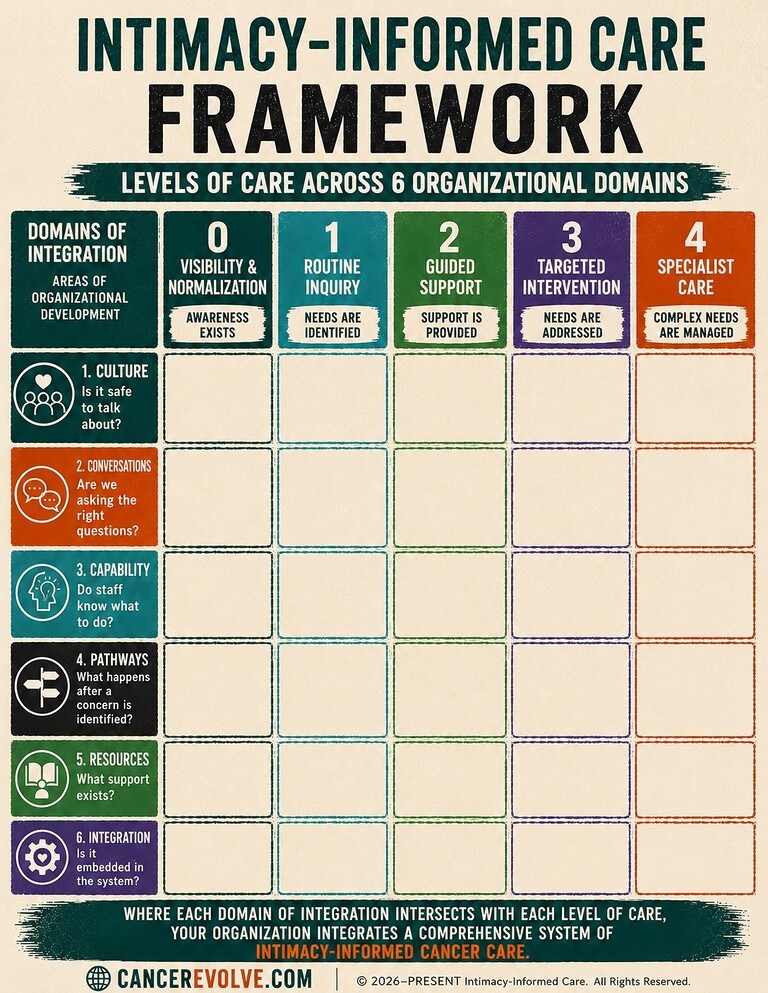

We work closely, nationally and globally, with:
- Hospitals and cancer centers
- Survivorship and rehabilitation programs
- Community cancer organizations and non-profits
- Professional associations and networks
Who our work supports
See where your organization stands across the CancerEVOLVE Framework to identify strengths, gaps, and opportunities for growth. Take our no-cost Organizational Readiness Snapshot.
How We Work With Organizations
We can help you identify where your organization is today and build from there.
Understand current readiness
Identify Hidden Strengths & Priority gaps
Select an appropriate starting point
Implement targeted improvements
Build intelligently toward sustainable integration
What would it take to make intimacy-informed care more consistent across your organization?
We need a clearer picture of where we are
Take our complimentary readiness snapshot.
See where you are.
We need support with a specific need
Explore our core offerings, focused solutions, trainings, and more.
We need a more comprehensive approach
Let’s talk about what you’re working toward and where CancerEVOLVE could help.
Evidence and credibility
At launch, you may not yet have traditional case studies with large numerical outcomes. Do not manufacture case-study language.
Use a combination of:
- Professional collaborations
- Pilot and advisory relationships
- Speaking and training engagements
- Framework development
- Selected testimonials, with permission
- Research and practice foundations
- Lived experience and professional training
- Geographic or institutional reach
Label developing projects accurately as “Collaborations,” “Current Initiatives,” “Pilot Development,” or “In Practice,” rather than implying completed client outcomes.
What would it take to make intimacy-informed care more consistent across your organization?
Let’s find out!
Take our Organizational Readiness Snapshot or begin a conversation about your institution’s priorities.